
Establishing front-end innovation to drive business and market growth.
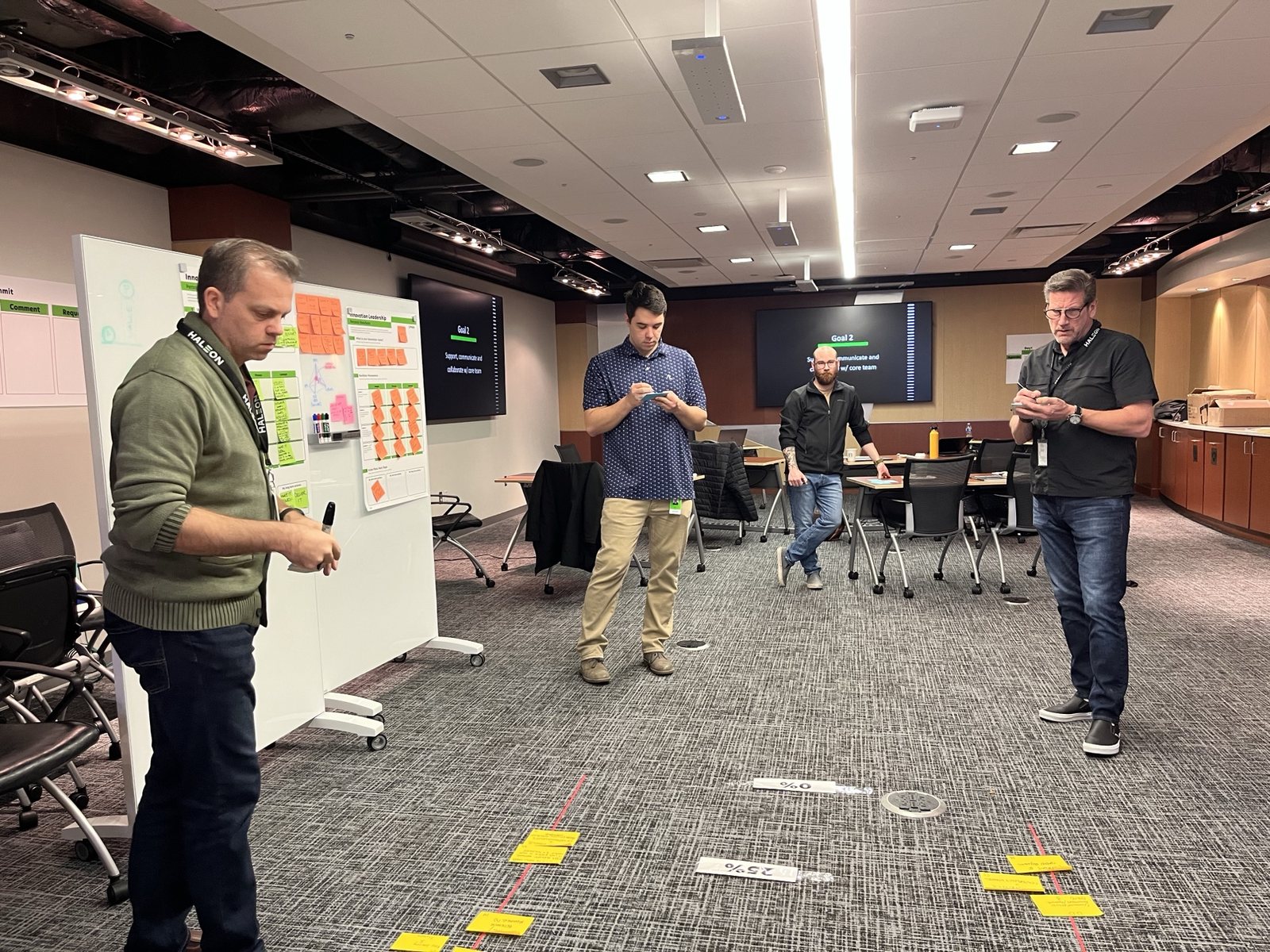
Front-end innovation is often seen as chaos. In my experience it is a system you can design, and it is where future growth begins.
Ask most leaders where growth comes from and they will point to the pipeline: the products in development, the launches, the gate reviews. Far fewer point to what happens before the pipeline. Yet that is where the future is decided: which opportunities get noticed, which ideas get a fair hearing, and which ones reach the business ready to be judged.
A few years ago we were asked to help a global consumer health company build exactly that: a new front-end open innovation function inside R&D, created from the ground up. Its job was to find materials, technologies and delivery systems the business had not yet considered, prove them out, and hand them to the company's innovation pipeline. Across several phases between 2021 and 2023, we worked alongside its founder and a small core team to define the why, who, what, how and when. Here is what that work taught me.
The myth of the chaotic front end
Front-end innovation is often misunderstood. People picture it as chaotic, unfocused, hard to direct and harder to judge. For those who work in it, that is a myth. Good front-end teams apply a great deal of structure. It is simply a different kind of structure from the one that governs development and launch.
The team we worked with described its role in a way I still like: pushes and pulls. The business pulls, asking for what it needs. The front end pushes, bringing opportunities nobody asked for because nobody knew they existed. A healthy front end does both. It stays in constant contact with the business and still remains free to explore.
That balance does not happen by accident. It has to be designed.
Start with purpose, and say what you are not
We began with a single one-page framework that answered five questions: why the function exists, who does the work, what it delivers, how it operates and when it will add value. Some of the most useful lines were the ones that said what the group was not: not brand specific, not working in silos, not an ad hoc prototyping service, not only technically focused.
Saying no is how a new function protects its focus. This team chose to concentrate on complex, platform-level innovation, the kind that can scale across brands, categories and regions, while still supporting simpler work. That one choice shaped almost every decision that followed.
Make maturity visible
The heart of the work was the operating model. We mapped a path from strategy and scouting, through proof of principle, to hand-off into the company's existing innovation process. Every opportunity moves through named levels of maturity: opportunity, idea, concept, prototype, pilot. At each stage the team knows the activities, the tools, the deliverables and, crucially, who decides, who advises, who is informed and who does the work.
This matters for growth because it makes the front end legible to the rest of the business. Leaders can see what is in the funnel, how mature it is and when it will be ready. Innovation stops being something you have to take on trust.
We also gave the team shared ways to judge. One review card scores new opportunities on whether they are scalable, novel, ownable, platformable, sustainable, feasible and ready. Another scores concepts on whether they are desirable, viable, feasible and responsible. Common criteria make for better conversations, and better conversations make for better investment decisions.
Design the process with the people who will run it
We did not hand the team a process. Every member put forward their own view of how the work should flow. Together we collected, consolidated and curated the strongest elements into one model, then shared it with a wider group of stakeholders for feedback. It went through many iterations.
Later, the team adapted our tools and templates into versions and language of its own. Some might see that as a loss. I see it as the best possible sign: the system had become theirs.
No function innovates alone
Open innovation depends on an ecosystem. We built a partner management system from scratch: a master list, an evaluation form, step-by-step templates from first outreach to interview to evaluation, and a one-page profile for each partner. The practical benefit was speed. When a project needed outside expertise, vetted partners were already there.
Inside the company, we mapped the internal stakeholders and planned how and when to engage them across the year. A front-end team that is invisible to its own organization will not be supported for long.
Invest in people, not just process
A function is only as strong as its people. We wrote job descriptions for the existing team, identified the new roles the vision required, built a competency model around knowledge, skills and attitude, and designed a 30, 60 and 90 day onboarding journey for new colleagues.
We also brought the team together in person for a two-day summit on innovation leadership, team goals and the roadmap ahead. Frameworks align thinking. Time together aligns people.
Tell the story
Finally, we helped the team tell its own story, including a printed book documenting the function from inception to future outlook. Communication is not decoration. It is how a new function earns the trust, sponsorship and resources it needs to deliver.
What I would tell any leader
If you want innovation to drive business and market growth, do not start with ideas. Start with the system that finds them, matures them and hands them over. Give it a clear purpose and clear boundaries. Make maturity visible. Build it with the people who will run it. Connect it to partners inside and outside the company. Invest in its people. And tell its story.
The front end is where tomorrow's growth begins. It deserves the same care we give to everything that follows it.
Related reading
The rise of the Chief Design Officer: why design leadership matters more than ever.
An updated reflection on design leadership, the C-suite, AI, and the growing role of design across business and government.
The age of responsible design, revisited.
Desirable, viable, feasible is no longer enough. Why we add a fourth lens, responsible, and why it matters even more in the age of AI.
Let's find your starting point.
Take the assessment to see where your organization stands, and what to do next.